.png?width=1500&height=398&name=CO_Corporate%20Logo%202021_4C_HOR_FNL-1%20(1).png)
The Chief Outsider
.svg)
Recent Posts

How to Engage Hard-to-Reach CXOs: The New Growth Playbook
This blog is part of Chief Outsiders’ New Growth Imperative series, designed to help CEOs and leadership teams engage executive decision-makers at targeted strategic accounts by turning deep insights into compelling customer value.

Marketing vs. Sales: Turning Antagonism into Alliance
Wed, Feb 8, 2012 —
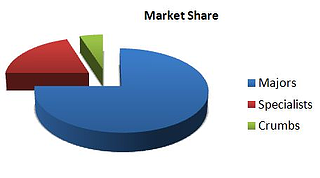
Maximizing Your Position In Your Market
Mon, Sep 26, 2011 — Every company must develop a strategic direction that best fits its capabilities and its standing in its marketplace. Most business categories fall into similar market share patterns. There are three major players who, combined, have roughly 70-90% of the market. Then you have a group of small savvy specialists that have identified an underserved audience within the market. These tend to be businesses that succeed based on lower volumes, by definition, but much higher margins. In general, they tend to have no more than 5% of the market each. And, finally, you have the remaining companies in the category that live on the crumbs that are left over.
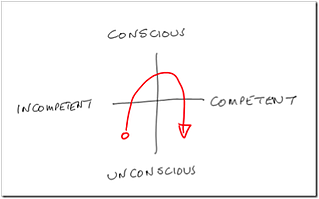
Situational Competence: A Requirement for International Management
Sat, Aug 6, 2011 — Small and mid-size businesses are becoming increasingly international. This means that CEOs who want to grow need to gain expertise in understanding employees and clients from different cultural backgrounds.
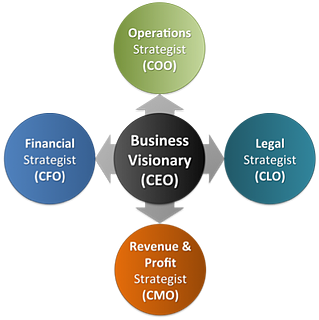
Four Must-Have Strategists Every CEO Needs
Sun, May 8, 2011 — Every CEO has the responsibility to set the vision and make certain the strategies to address this vision are created and implemented. The CEO must determine what resource options are best suited to help develop and implement the various strategies and budget accordingly.
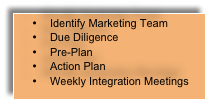
Building Company Value After an Acquisition
Sun, Mar 27, 2011 — Marketing’s Role in Post-Merger Integration The deal was just signed! Now what do we do? How many times have we heard this familiar cry? You are not alone. Over 70% of the deals completed today fail to add company value! The primary reason for most failures: poor post-merger integration planning and execution. The integration of two businesses after an acquisition is no longer restricted to the domain of Finance and IT. Markets drive our businesses today! The role of Marketing in building company value after an acquisition is more critical than ever before. To build market share, competitive dominance and product superiority, Marketing’s approach to the integration program must be very systematic. Marketing must uphold the brand, maintain customer confidence and leverage all possible synergies while vigilantly monitoring ROI. As if this isn’t a difficult enough balancing act, Marketing must articulate the longer-term “go-to-market” strategy to ensure the continuity of value enhancement programs long after the integration process is complete. So where do you begin?

7 Tactics for Customer Closeness with Improved Customer Profiles
Thu, Dec 23, 2010 — Customer Closeness Begins with Great Customer Profiles Think about your ideal customers. Do you have customer profiles to better understand who they are? Do you know them well or are they strangers? If they’re consumers, you might know basics like age, gender, household income, and some of what they buy. If they’re a business, you probably know what industry they’re in, what their revenues are, and some trends facing them. But knowing the basics won’t tell you what issues they face in their daily lives or business, how well they are or aren’t resolving those issues, where they go to find out more about resolving things and how they go about making a decision. You need to know what motivates them, how their attitudes and actions are measured, and what their priorities are. With detailed customer profiles, you can better customer closeness for your company. How do you get better customer profiles? Get to know your customers.