.png?width=1500&height=398&name=CO_Corporate%20Logo%202021_4C_HOR_FNL-1%20(1).png)
Art Saxby

Recent Posts

Outsider Insights | You Built Something Different. Your Messaging Made It Sound the Same.
Outsider Insights
Across Chief Outsiders, we talk to hundreds of CEOs every month. In this series, we explore the trends and challenges we’re hearing from these discussions – and what you can do if you’re facing the same issues in your business.

Uncertainty Is Real. Opportunity Is Too.
Mon, Jun 15, 2026 — The headlines say one thing. The data says something more nuanced. Here's what mid-market CEOs should actually be paying attention to right now. This two-part series from Chief Outsiders Founder & CEO Art Saxby explores what the data actually shows about CEO confidence, why this moment is different from past disruptions, and where mid-market companies are finding real growth opportunities right now.

When Hiring a CMO, Ask These Three Crucial Questions
Thu, Mar 25, 2021 — A senior marketing executive can revolutionize a company’s growth, but choosing the right candidate requires asking three key questions to understand first what the company needs, and then if the candidate can deliver it. There are times when a Chief Marketing Officer might not feel like a necessity, especially for a middle market company that has managed to grow well without one. But what worked for years can falter: growth stalls, a competitor begins to dominate the market, or new investors arrive with a more ambitious vision for the enterprise. And that can prompt the hunt for a new marketing leader. Like any talent search, the process can seem obvious in theory, but much more daunting in practice. People might have the right names on their resume and glowing references, only to still prove a bust when faced with the unique circumstances of a given business.

What can Industrial & Manufacturing CEOs do Right Now?
Fri, Jul 10, 2020 — Industry Specific Advice for Marketing in a Time of Recovery from the Chief Outsider CMOs The following summary encapsulates the highlights of a panel discussion for the Industrial Manufacturing sector hosted by Art Saxby and featuring CMOs Kimberly Miller, Atul Minocha and Dawn Werry. For the full benefit, view the discussion video in its entirety (15 minutes). Short of time? See the discussion highlights (6 minutes). When the pandemic first hit, events for the industrial manufacturing sector were changing daily. Now, at the start of the recovery phase the entire industry is adapting. Some companies have had to find completely new markets for their products, while others have started making completely new products. Across the board, supply chains have been disrupted. Buyer behaviors have changed and go-to-market strategies have had to adjust in order to keep business moving.

It’s Inc. 5000 Season – Should You Apply?
Mon, Feb 23, 2015 — What Does It Take to Make the Inc. 5000? To make it in the Inc. 5000 list of America’s fastest growing private companies, a business needs to move from being a scrappy startup to a scaling company. First, the company must simply stay alive 5 years and then hit some revenue minimums to make it on the list. The Inc. growth ranking is based on the last 3 of those 5 years minimum of being in business. The full requirements and application are listed on the Inc. 5000 application site. (Note this year’s deadline is April 30th)
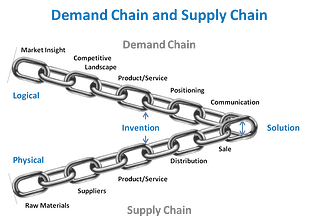
Growth Opportunity: The Demand Chain
Mon, Mar 19, 2012 — Efficiency Only Goes So Far The last ten years of American business have been focused on integrating and perfecting operational efficiencies through the perfection and active management of the Supply Chain. For the last couple of years of economic turmoil, many companies have almost exclusively focused on supply chain efficiencies as a strategy for survival. Now the challenge is taking the expertise and company culture focused on linear thinking and introspection of the supply chain and start growing again.